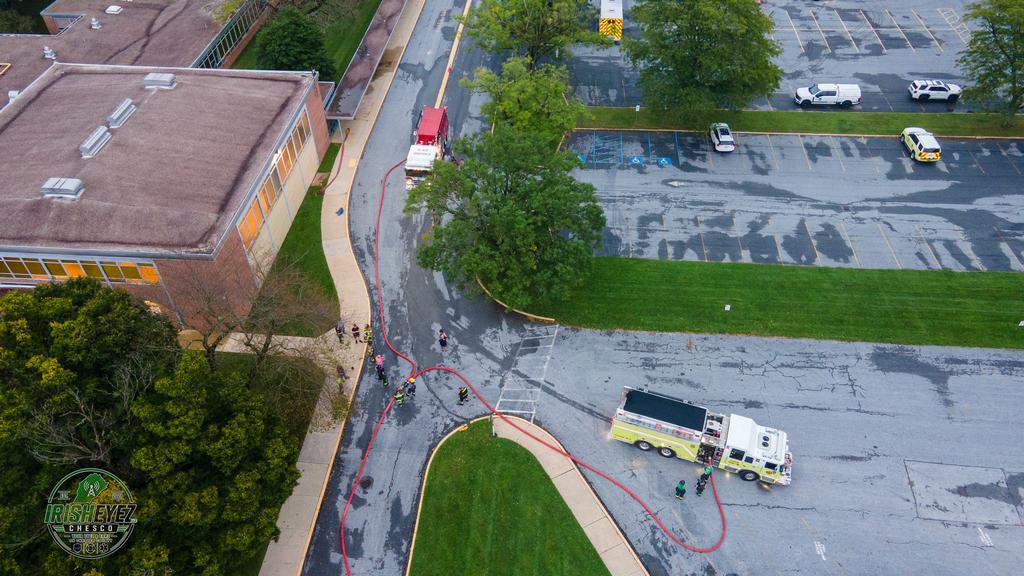
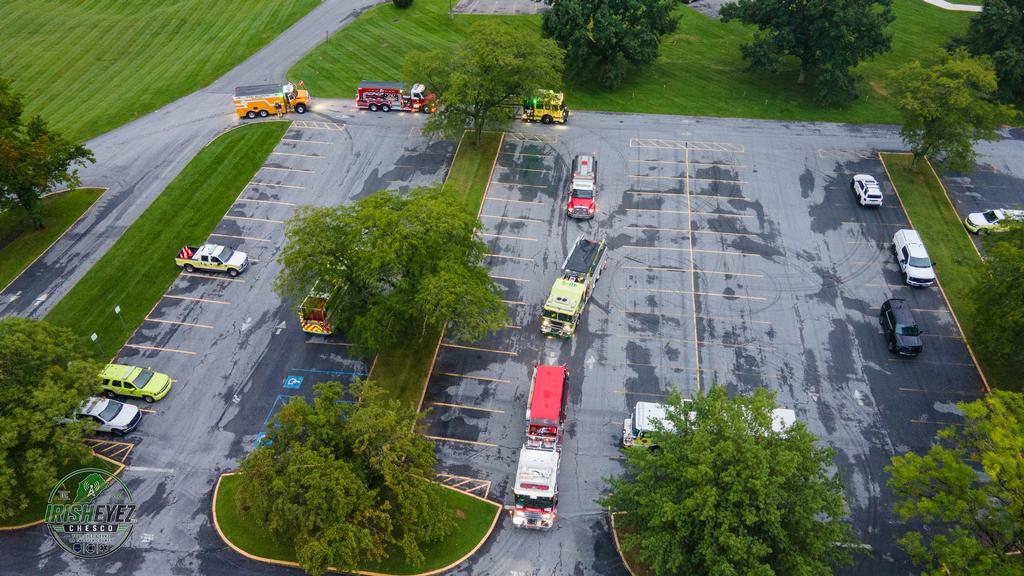
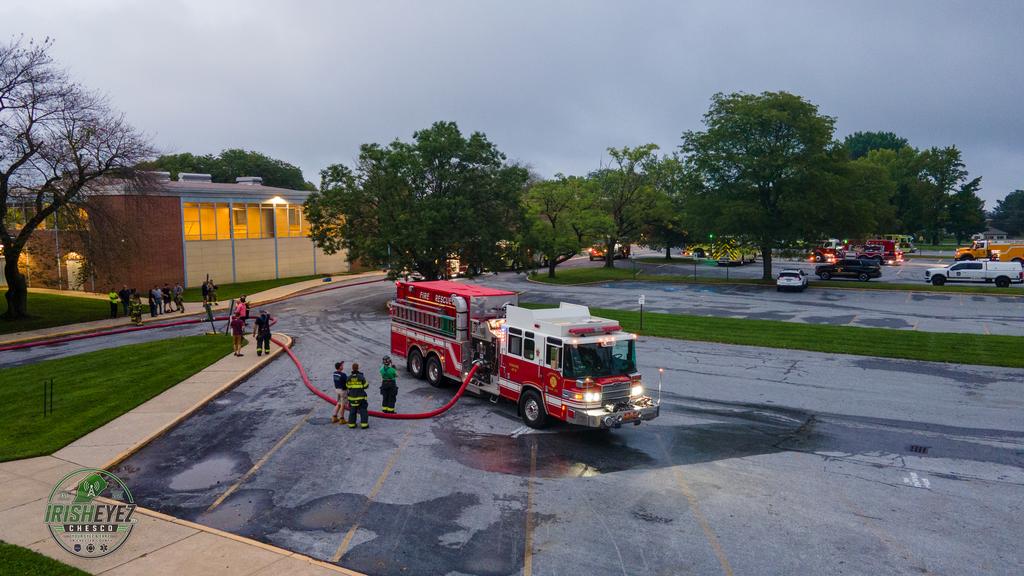
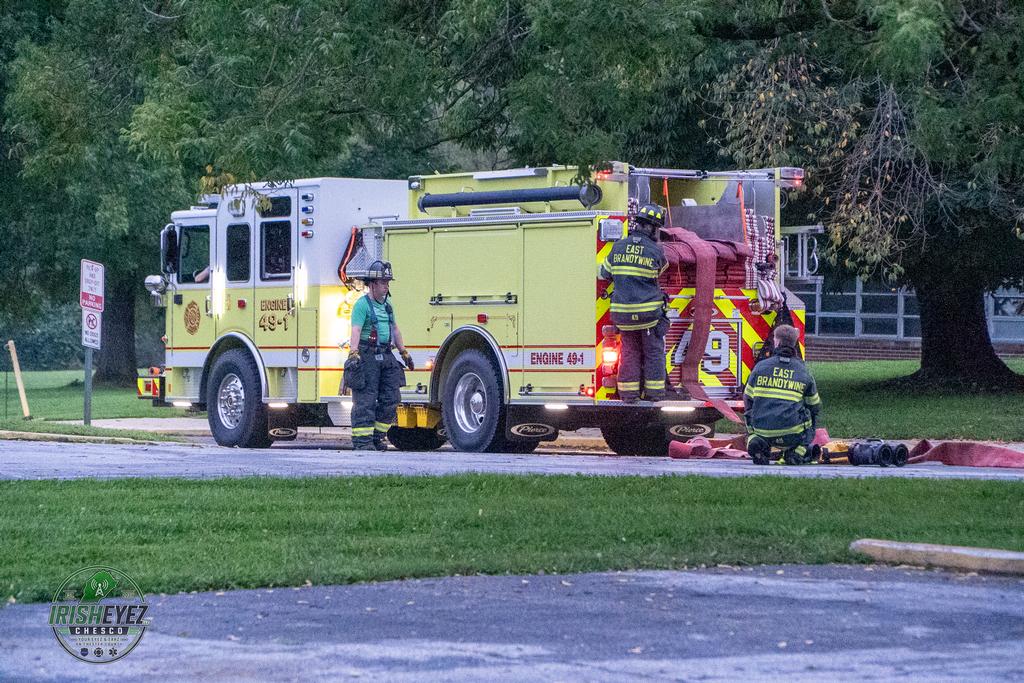
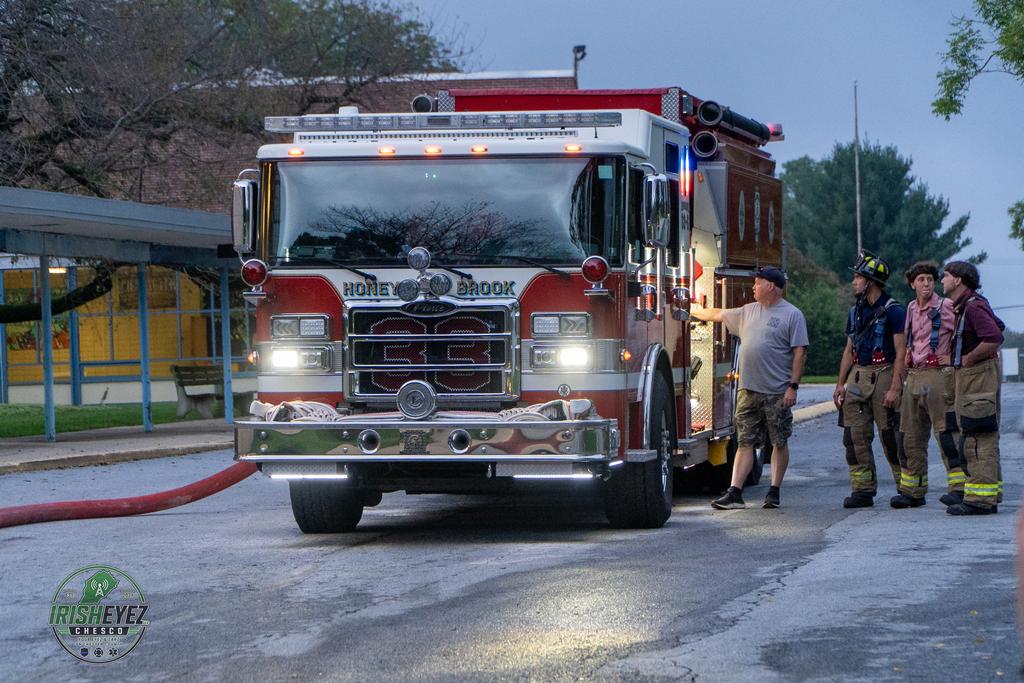
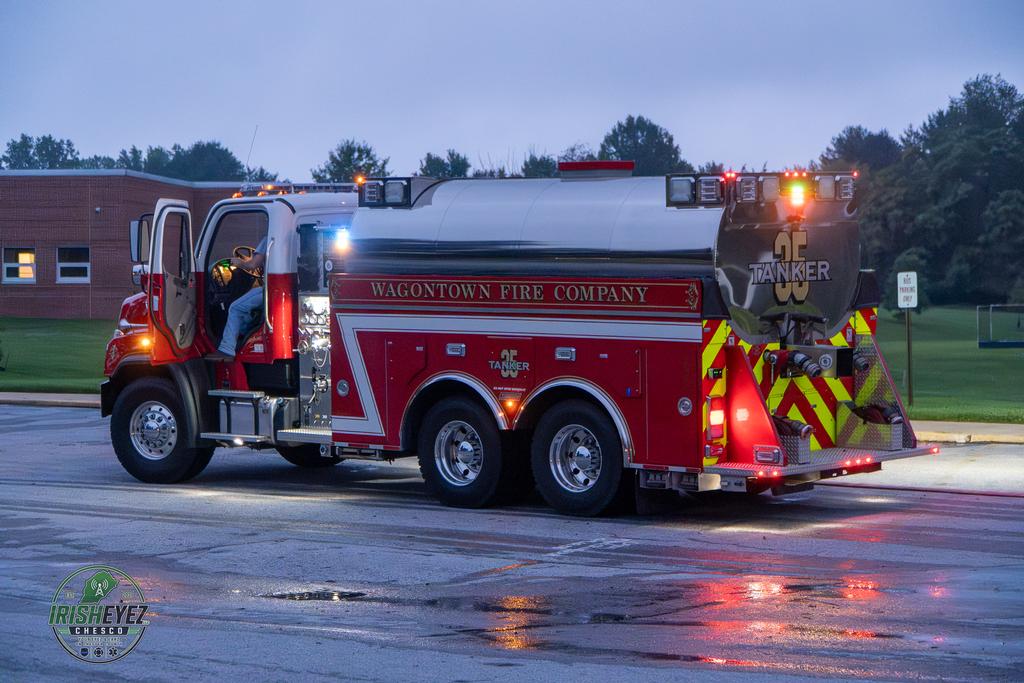
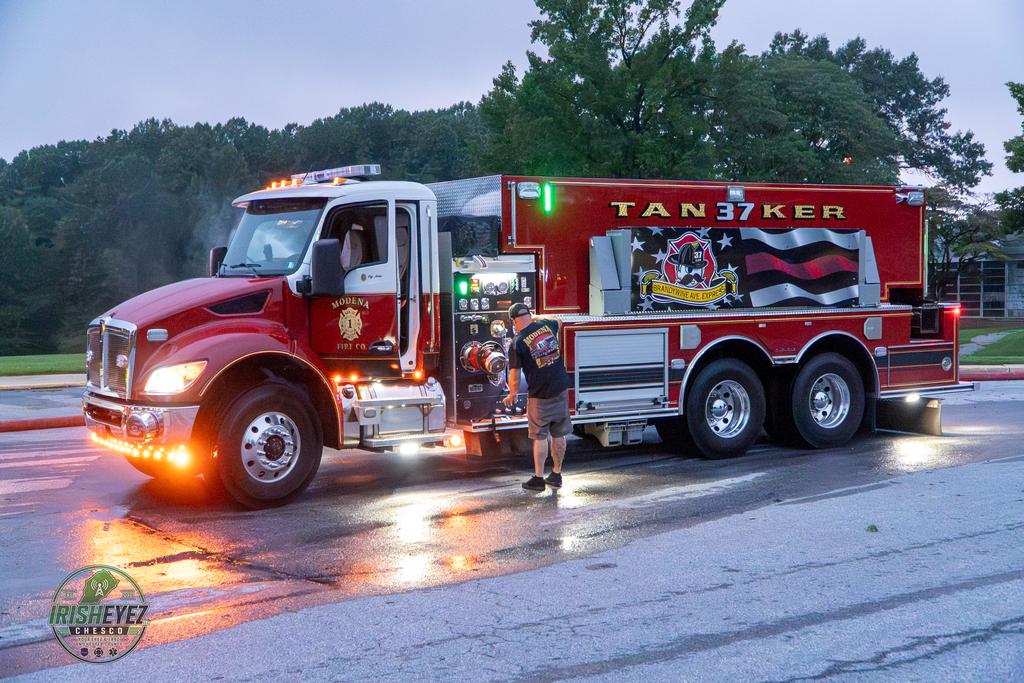
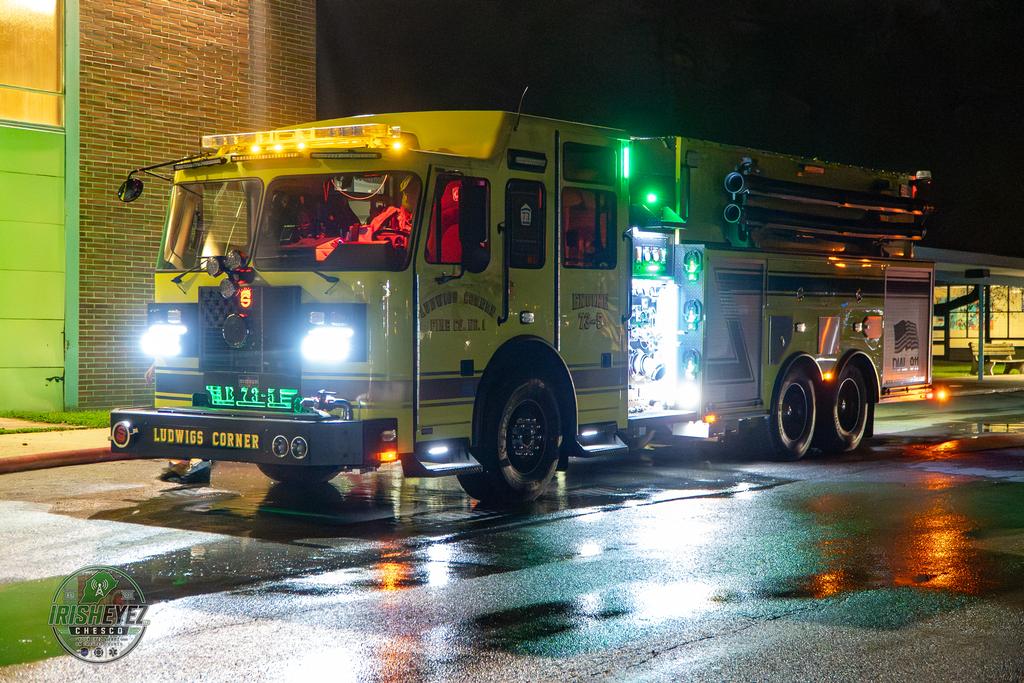
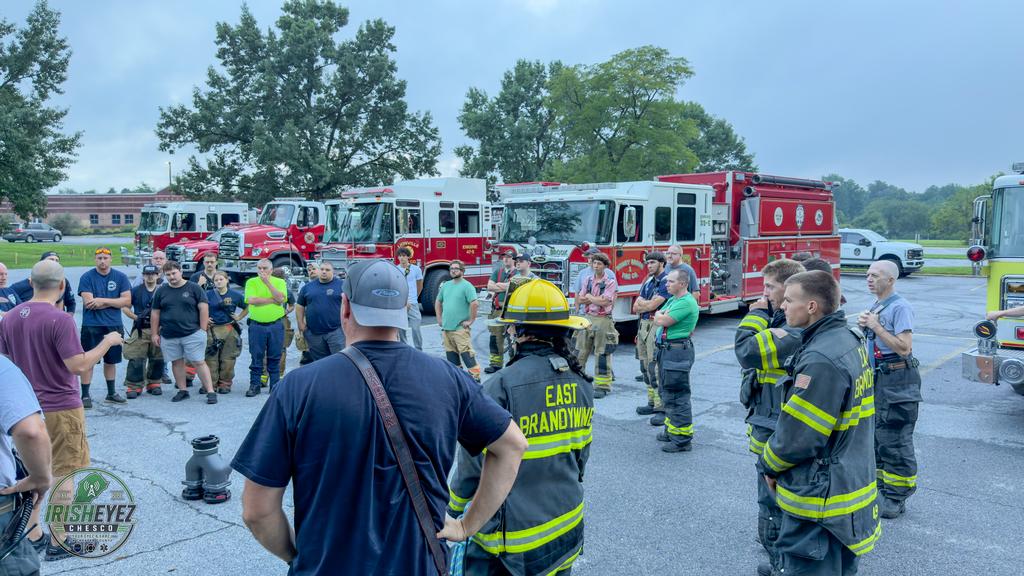
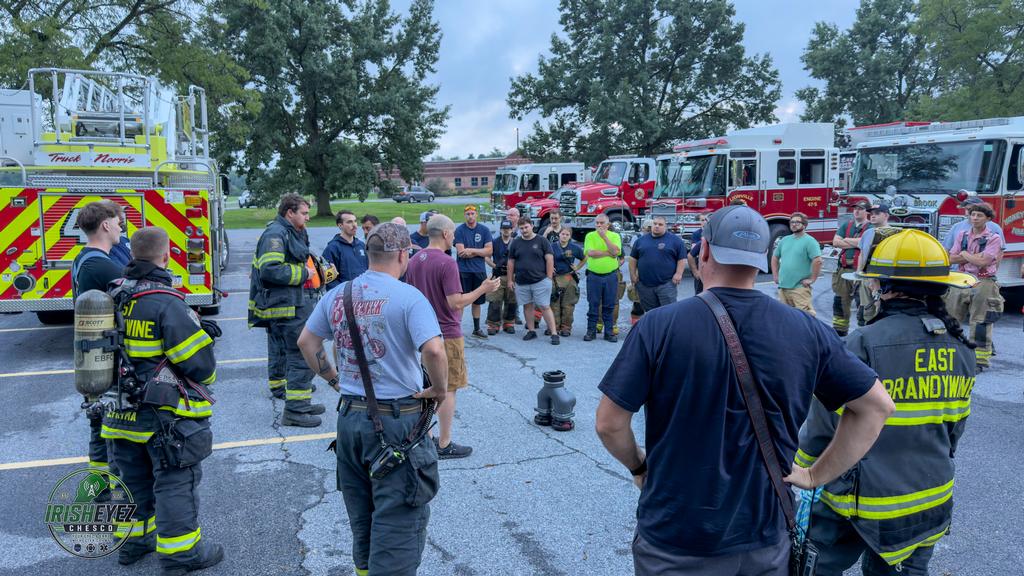
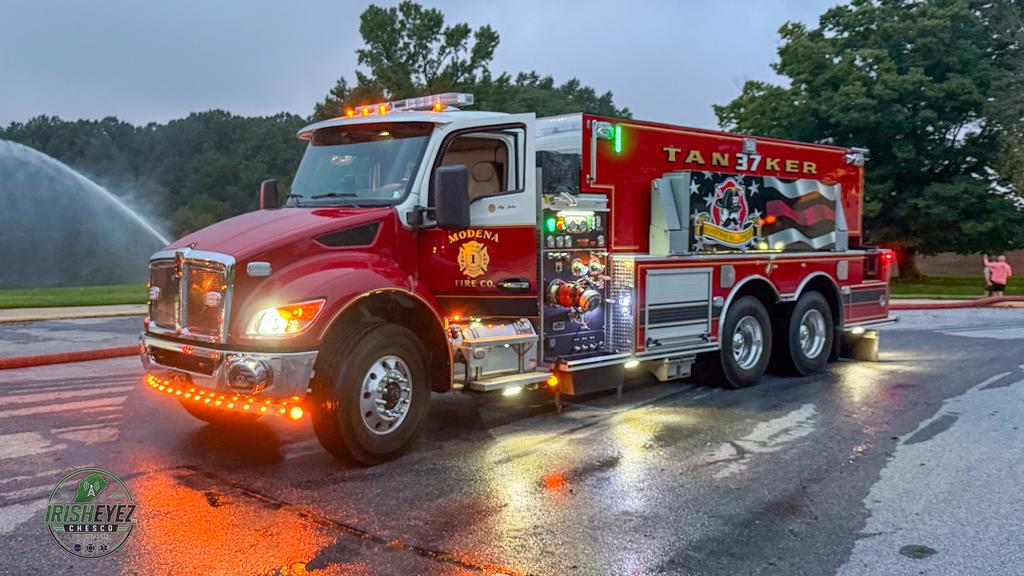
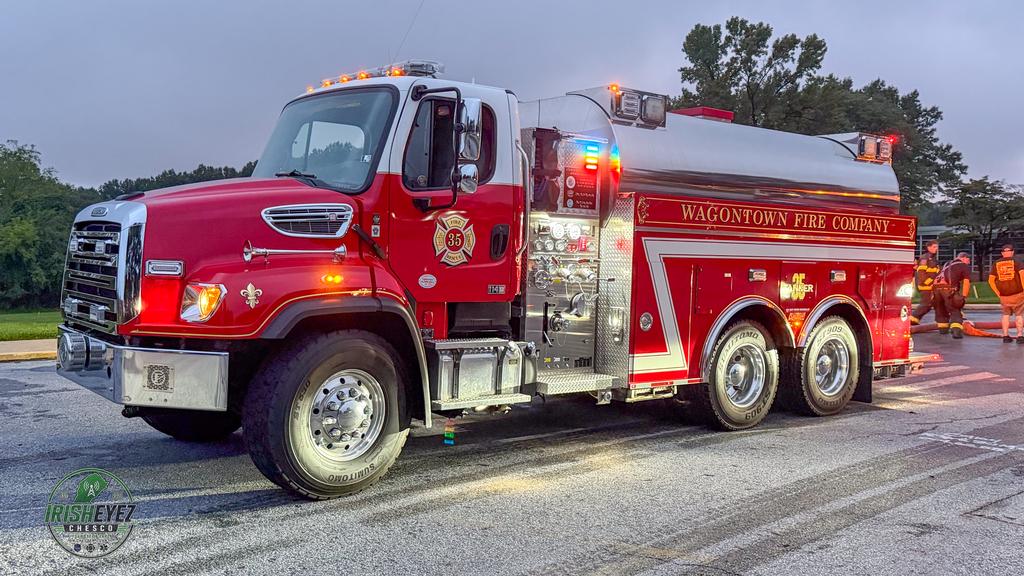
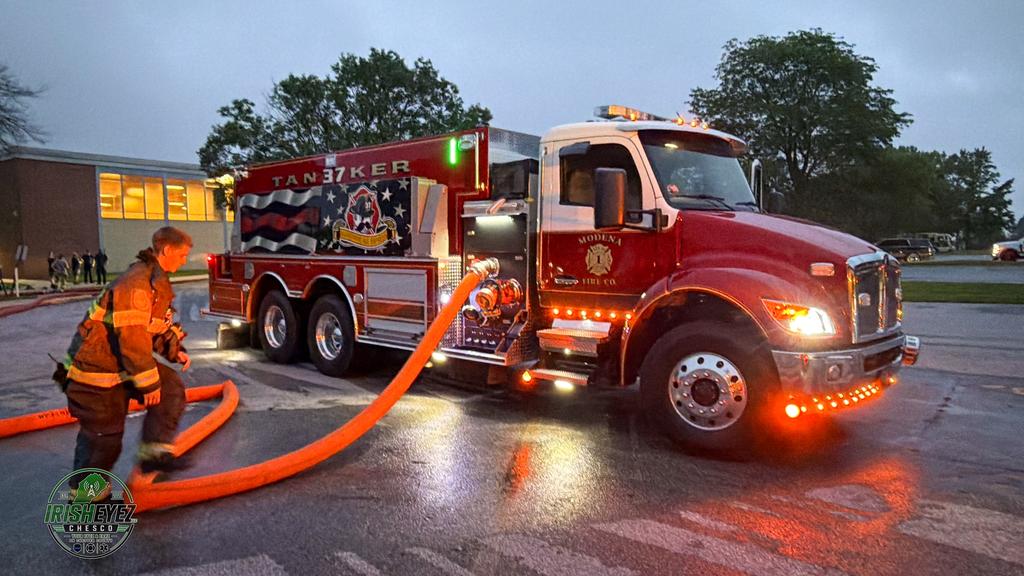
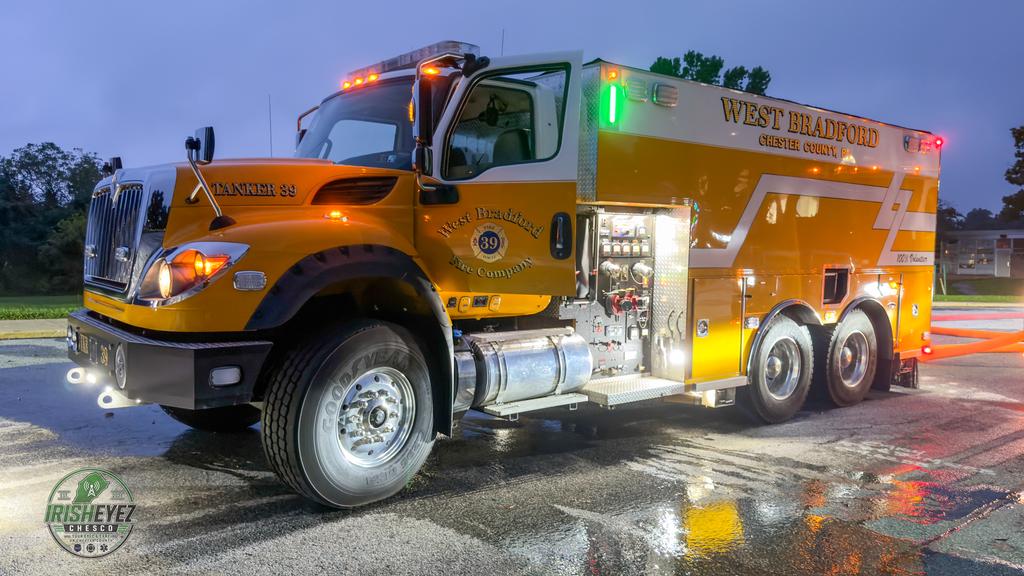
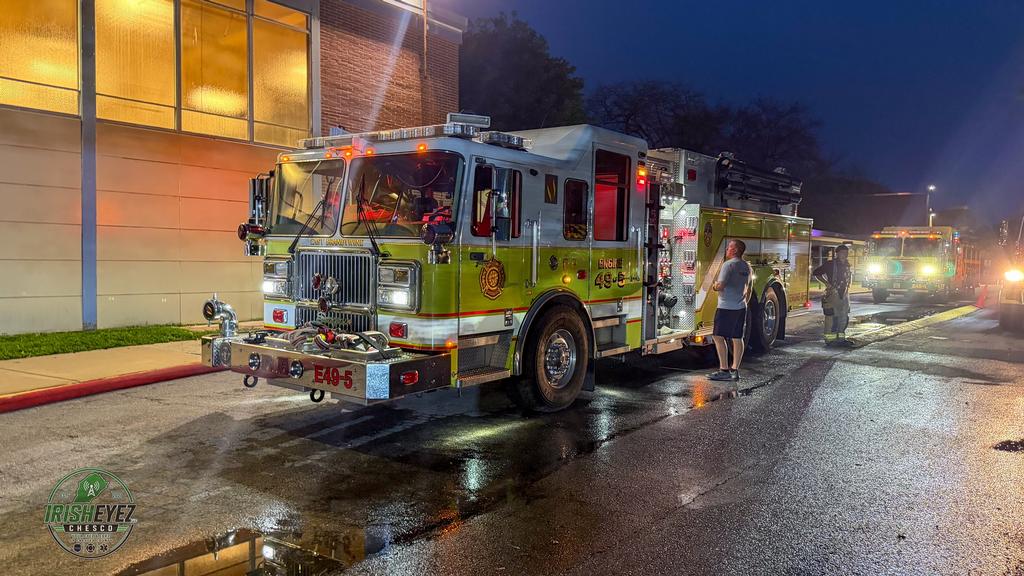
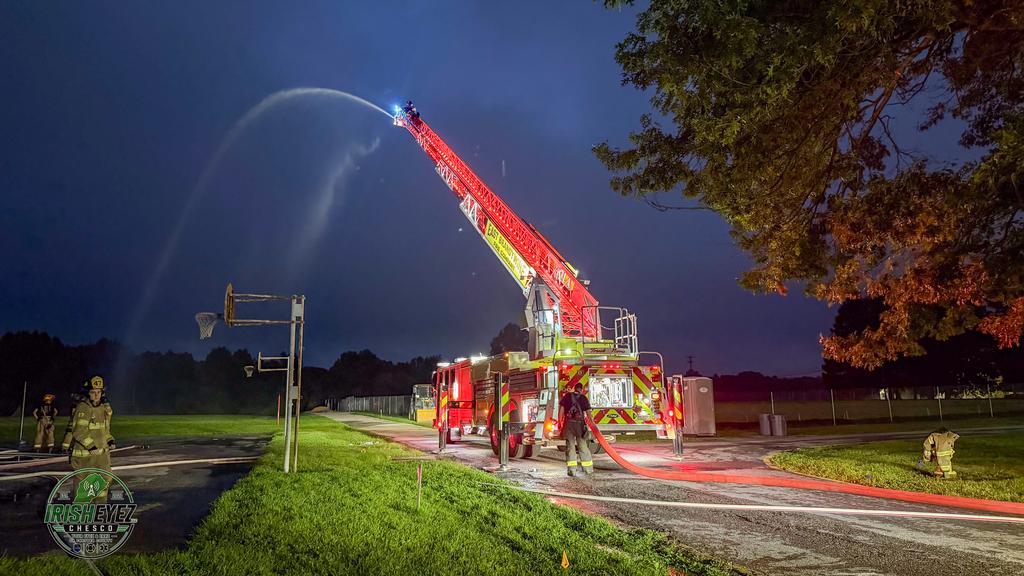
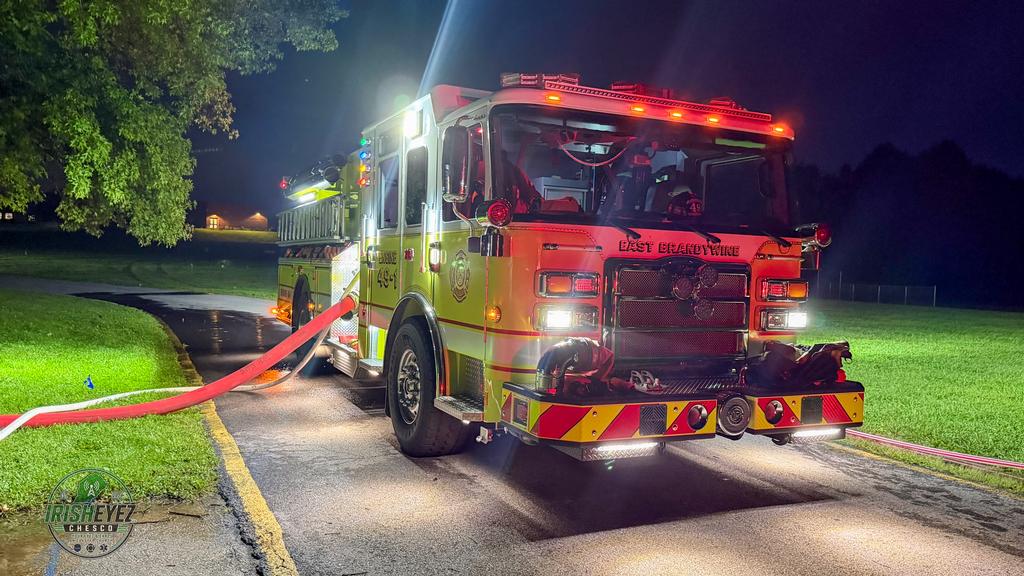
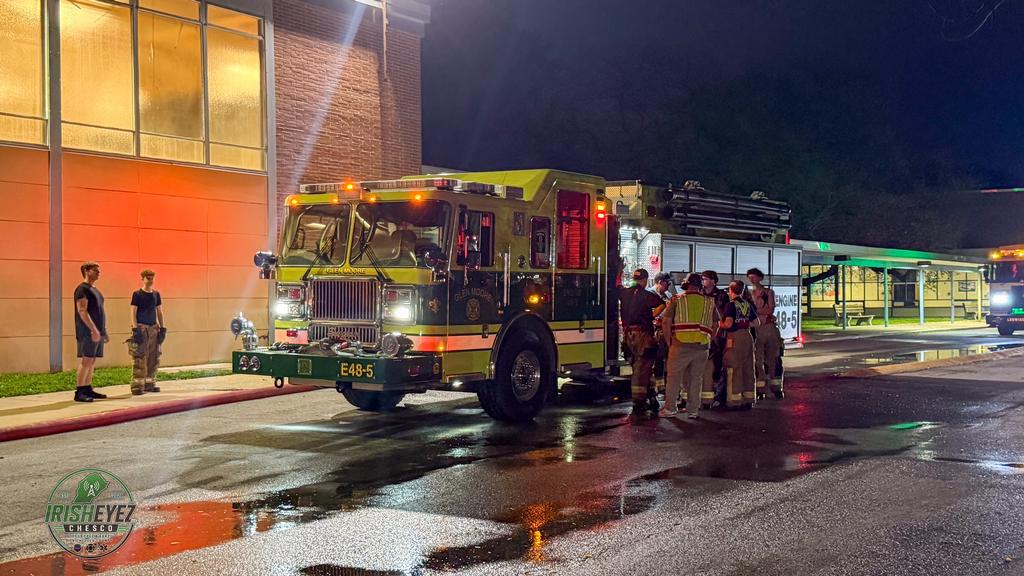
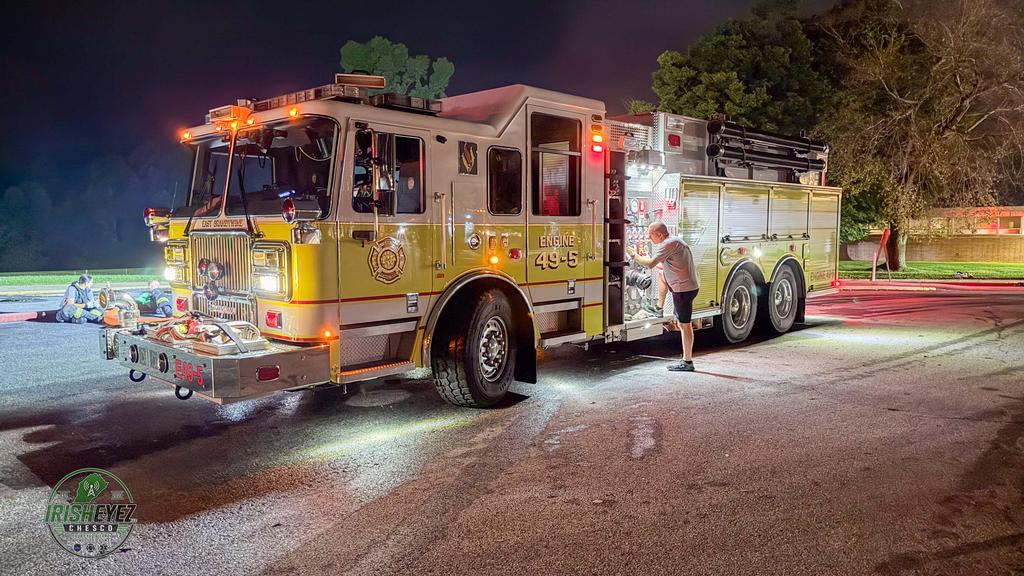
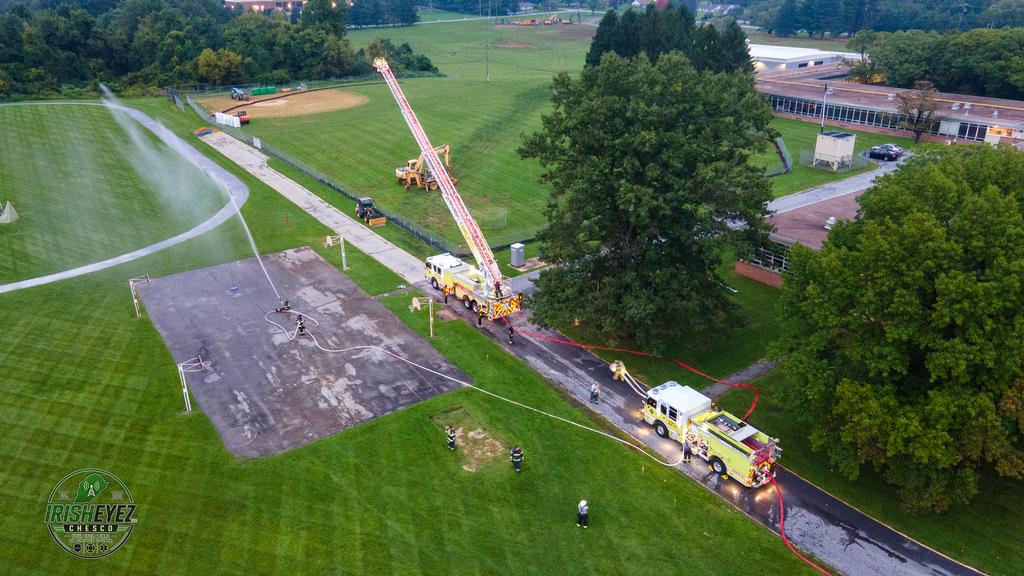
| This past Wednesday night, the East Brandywine Fire Company, along with mutual aid partners from Wagontown, Glen Moore, Honey Brook, Lionville, Ludwigs Corner, West Bradford, and Modena Fire Companies, traveled to the North Brandywine School parking lot for Part 2 of our Water Supply Drill.
Every department participating in this training protects at least some areas where fire hydrants are not available. When a large-scale fire occurs in one of these areas, tankers and water shuttle operations become critical to supplying firefighters with the large amount of water needed to extinguish the fire.
Recently, East Brandywine Fire Company has begun utilizing what is commonly referred to as a “clapper valve” as part of our water supply operations.
The clapper valve allows two pieces of apparatus to connect to a single supply line at the same time.The first apparatus pumps the water from its tank toward the fire scene. As its tank becomes empty, the second apparatus can immediately begin supplying water, allowing for a nearly seamless transition with little to no interruption in water flow.
The empty apparatus then disconnects and travels to a designated fill site to refill its tank. Another tanker moves into position and prepares to take over once the tanker currently supplying water is empty. This rotation continues for as long as water is needed at the fire scene.
Depending on the incident, crews may continue using the clapper valve throughout the operation or transition to a portable water tank (porta tank) operation if additional water supply capabilities are needed.
🔥 PUTTING IT INTO PRACTICE
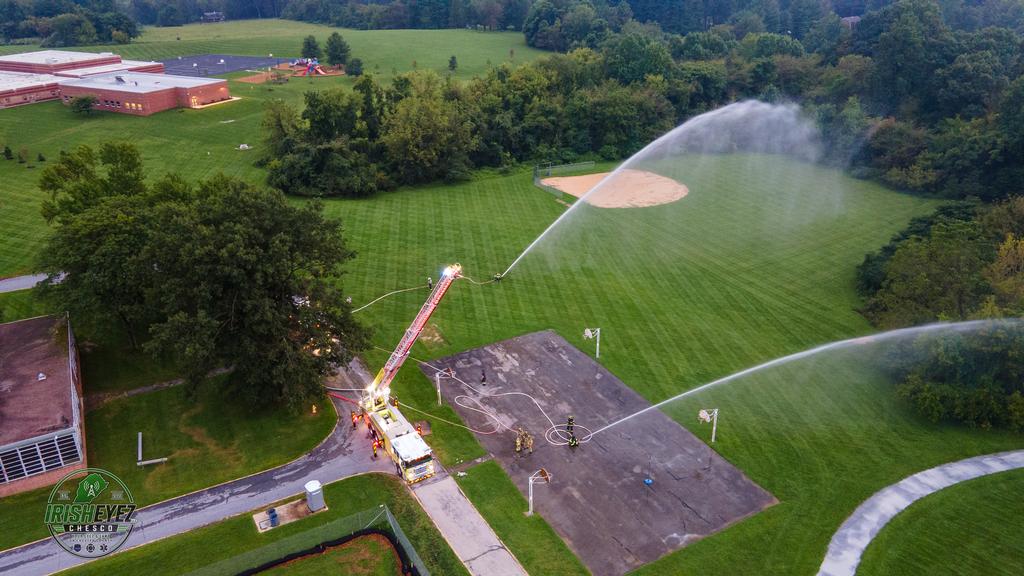
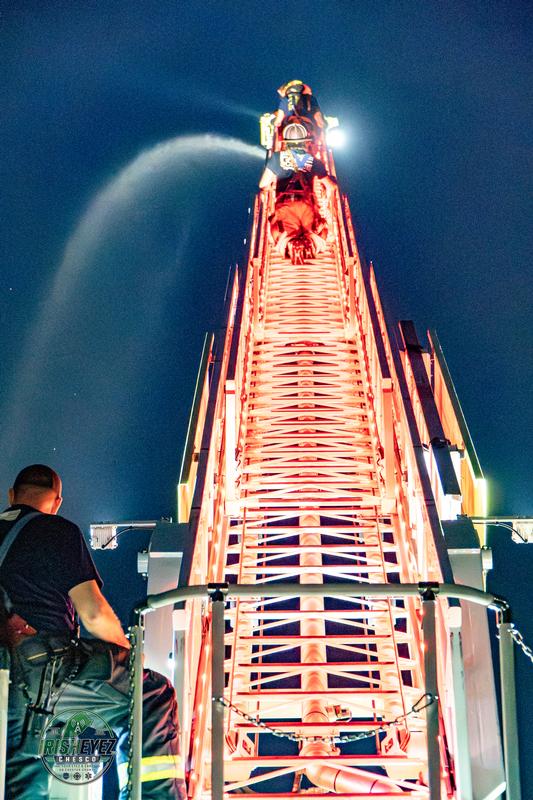
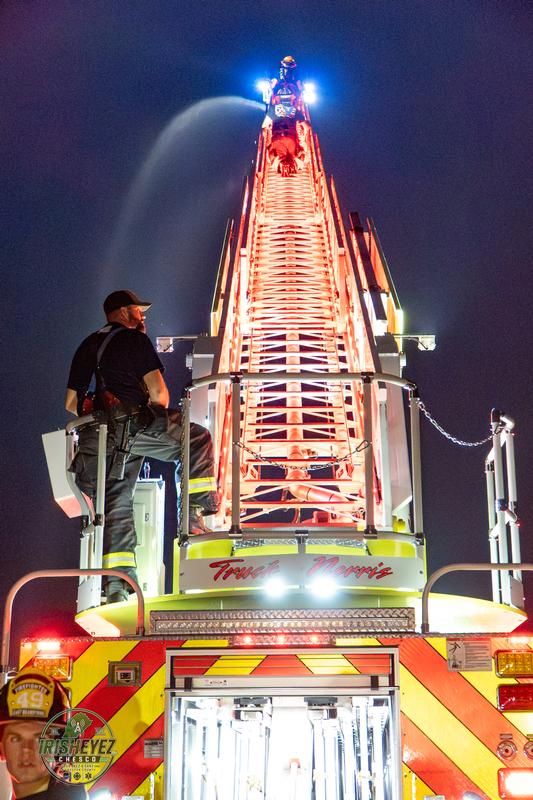
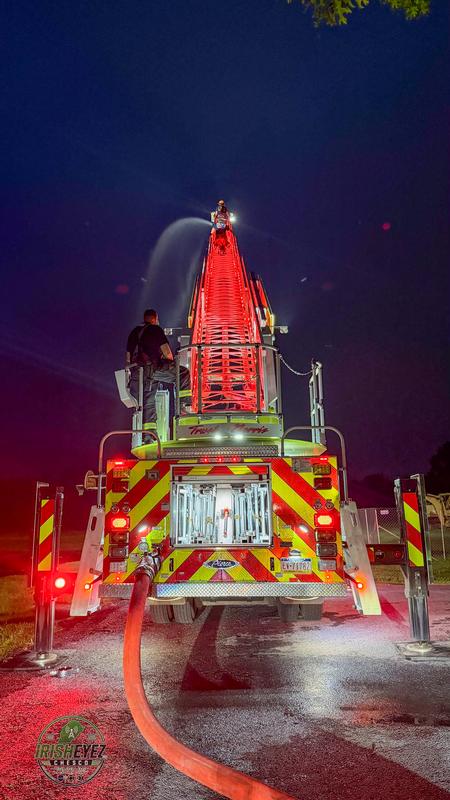
The focus of Wednesday night's training was to simulate a working fire where Engine 49-1 and Ladder 49 were operating at the fire scene and required a significant, continuous water supply.
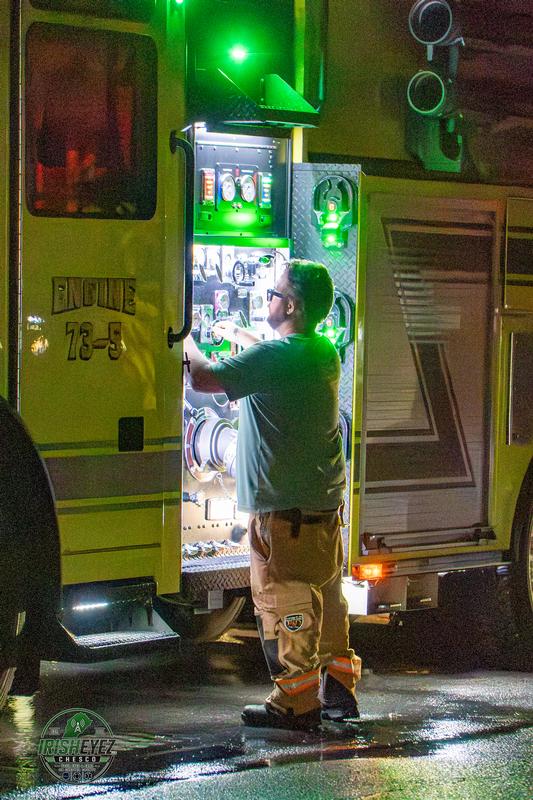
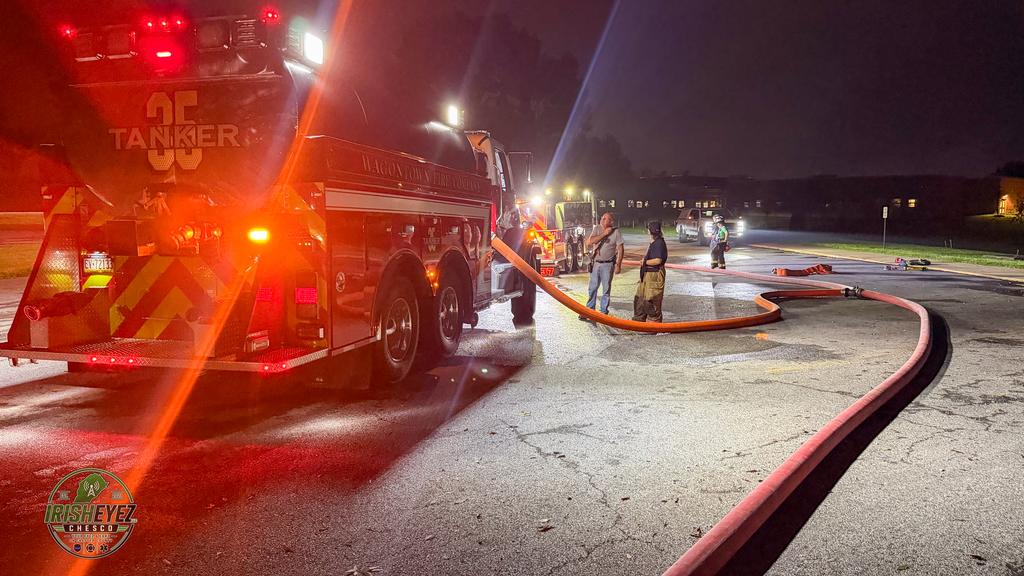
Participating tankers rotated through the water shuttle, supplying Engine 49-1 and Ladder 49 through the clapper valve before leaving to refill and returning to the operation.
While the concept may sound simple, successfully establishing and maintaining this type of water supply operation requires considerable coordination.
📻 Communication is key.
Constant communication between the Water Supply Officer, apparatus operators, tanker drivers, and other personnel is necessary to make sure everyone knows which apparatus is supplying water, which one is preparing to take over, and which units are traveling to or returning from the fill site.
Most tankers participating in these types of operations carry approximately 2,500 gallons of water or more. A large, fully involved house, barn, or similar structure can potentially require tens of thousands of gallons of water over the course of an incident.
That makes it imperative that enough tankers are requested early and that firefighters throughout our mutual aid network are familiar with establishing and operating these water supply systems.
Training together before an emergency allows departments to become familiar with each other's equipment, procedures, and personnel so that when we're called upon to work together at a real incident, everyone understands their role.
A huge thank you to the members of Wagontown, Glen Moore, Honey Brook, Lionville, Ludwigs Corner, West Bradford, and Modena Fire Companies for taking the time to join us for this training.
We greatly appreciate our mutual aid partners and hope everyone was able to take something valuable away from the evening.
Train together. Work together. Protect our communities together. 🚒💧 |